


Riverbank Protection
Used on rivers, lakes, and landscape waterways to form permeable and ecological slope protection.

Reno mattress, also known as gabion mattress, is a low-height, large-area light gabion protection unit. It is made from hot-dip galvanized, Galfan zinc-aluminum alloy, or coated hexagonal wire mesh panels, then assembled into a flat box structure for river channels, embankments, drainage channels, and lake bank protection.
Compared with standard gabion baskets, Reno mattresses are lower in height and cover a wider surface. They can closely follow slopes and riverbeds, forming a continuous flexible stone-filled protection layer for erosion control, bottom protection, slope protection, soil conservation, and ecological bank restoration.
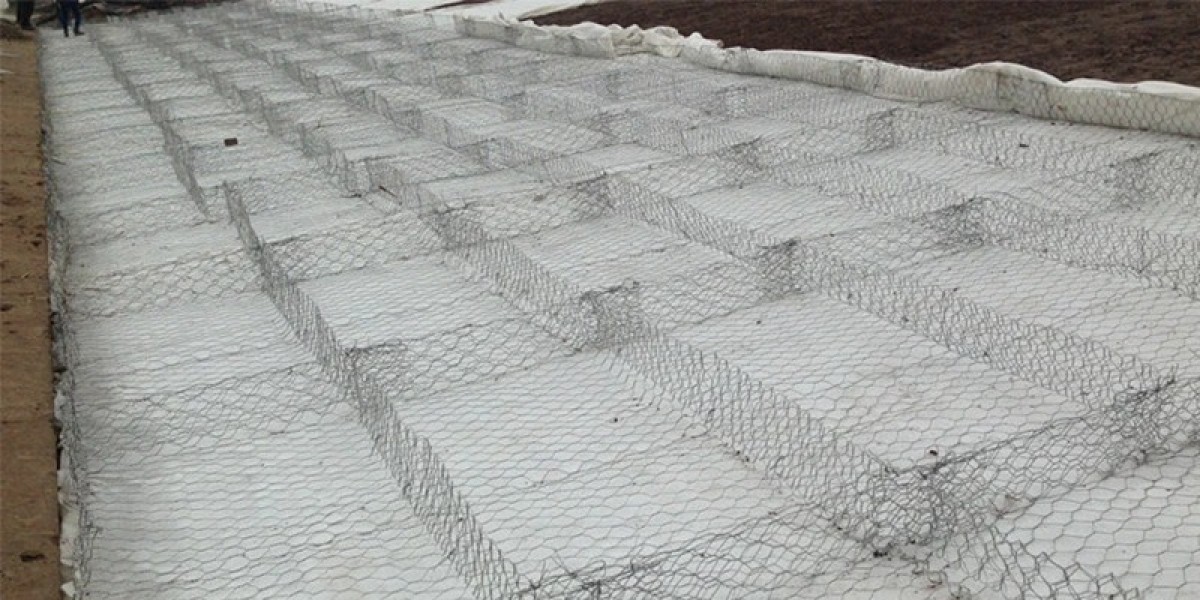
Reno mattress is a low-height flat box structure made of top mesh, bottom mesh, side panels, end panels, and internal diaphragms. The mesh is usually double-twisted hexagonal wire mesh. After being laid on site, filled with stone, and closed with a lid, it forms a continuous surface protection layer for riverbeds, embankment toes, channels, and eroded slopes.
Reno mattress works by covering erosion-prone slopes or riverbeds with a thin stone-filled gabion layer. The stone layer disperses water impact, the voids maintain permeability and drainage, and the flexible mesh body adjusts to slight foundation settlement. Connected mattress units form a stable and continuous ecological erosion-control system.
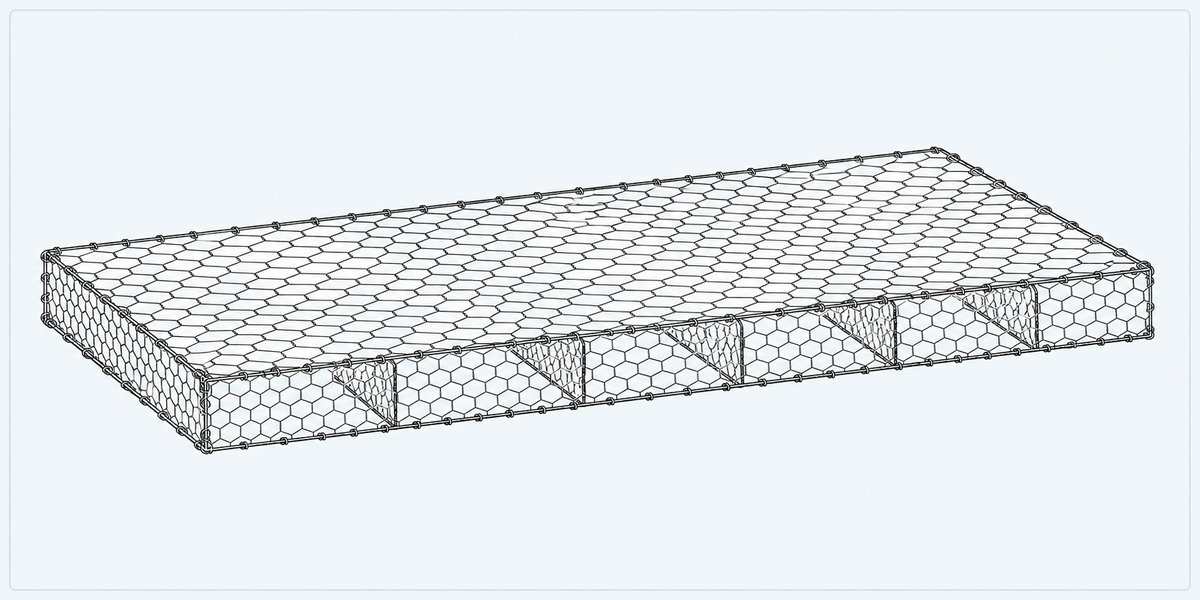
| Common height | 0.17m, 0.23m, 0.30m, customizable by project requirements |
| Common length | 3m, 4m, 5m, 6m, customizable |
| Common width | 2m, 3m, customizable |
| Mesh opening | 60×80mm, 80×100mm, commonly used for hydraulic slope protection |
| Wire material | Hot-dip galvanized wire, Galfan zinc-aluminum alloy wire, coated wire |
| Surface treatment | Hot-dip galvanized, Galfan, PE/PVC coated |
Used on rivers, lakes, and landscape waterways to form permeable and ecological slope protection.
Suitable for drainage channels, irrigation canals, and flood discharge ditches to reduce flow erosion and slope damage.
Used for embankment toes, floodplains, stilling basins, and upstream or downstream areas of bridges and culverts.
Used for reservoirs, wetland parks, and waterside landscape banks, balancing slope stability with vegetation recovery.