


Soft Road Subgrades
Used for soft soil and filled roadbeds to improve base integrity and reduce differential settlement.

Reinforced gabion mesh, also known as road reinforcement mesh, is a double-twisted hexagonal wire mesh used for road subgrades, pavement base layers, bridge backfill, and roadside slope reinforcement. The mesh works with crushed stone and compacted fill to form a flexible reinforcement layer, helping distribute vehicle loads and reduce the risk of settlement-related pavement cracks.
The product can be supplied as reinforced gabion mesh rolls or cut reinforced mesh panels. Rolls are suitable for continuous laying over large roadbed areas with fewer joints, while panels are used for bridge and culvert backfill, roadside slopes, gabion facing, and segmented reinforcement areas.
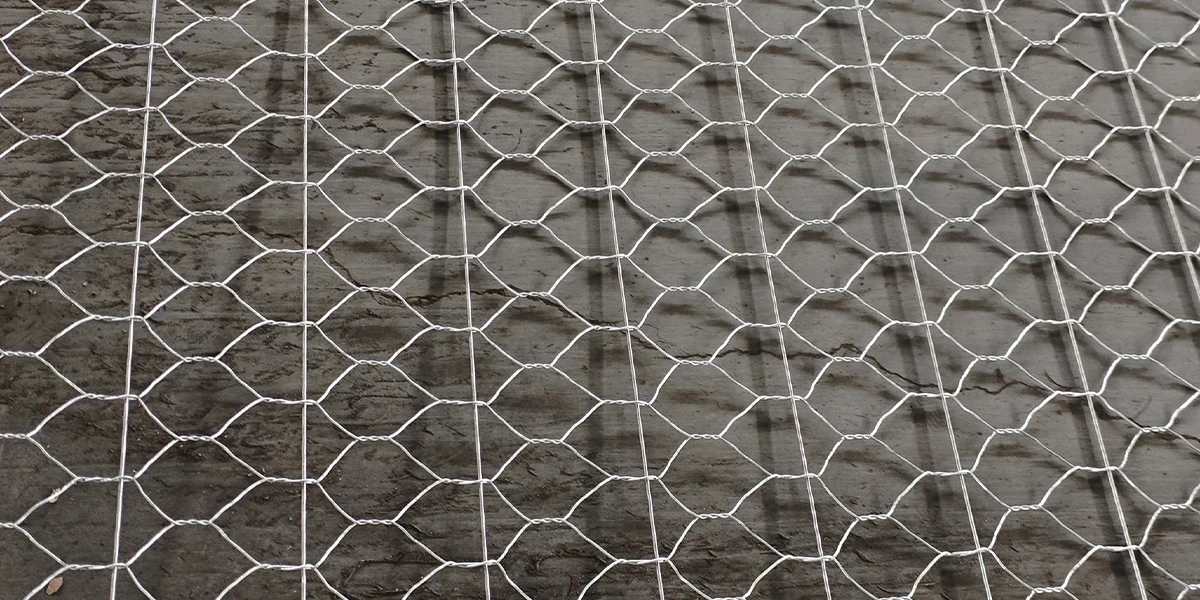
Reinforced gabion mesh is made of double-twisted hexagonal mesh, selvedge wires, and heavier reinforcement wires. The reinforcement wires are usually thicker than the standard mesh wires to increase overall tensile capacity. According to road project requirements, it can be supplied as continuous rolls or cut into fixed-size panels for use with crushed stone layers, geosynthetics, or compacted backfill.
Reinforced gabion mesh works through interlock and friction between the hexagonal mesh, crushed stone, and soil, forming a flexible composite reinforcement layer. When traffic loads are transferred to the road base, the mesh helps distribute tensile forces, restrain lateral soil movement, and reduce differential settlement, which helps control pavement cracks, potholes, transverse joints, and bridge approach bumps.
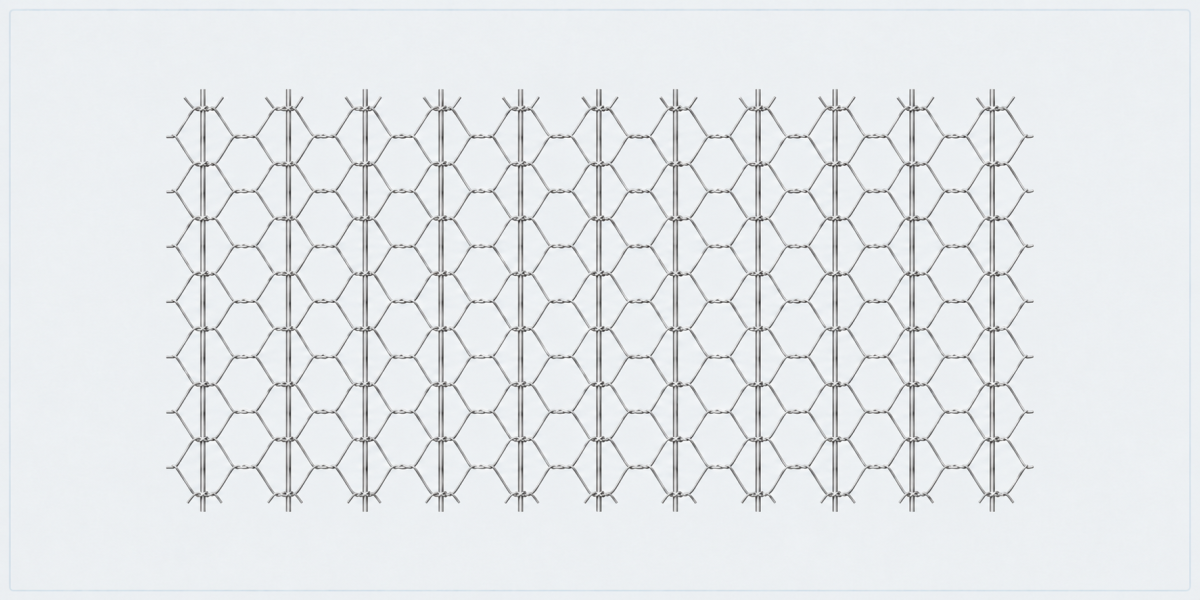
| Mesh wire diameter | 2.0-2.4mm, customized according to design requirements |
| Reinforcement wire diameter | 3.4-4.0mm, usually thicker than standard mesh wire |
| Mesh opening | 80×100mm is commonly used for road subgrades; 60×80mm and other sizes are available |
| Surface treatment | Hot-dip galvanized, Galfan zinc-aluminum alloy, PE/PVC coated |
| Supply form | Reinforced gabion mesh roll, cut panel, or panel for gabion basket assembly |
| Roll size | Common widths: 2m, 3m, 4m; roll length: 30-50m, customizable |
Used for soft soil and filled roadbeds to improve base integrity and reduce differential settlement.
Laid under asphalt or concrete pavement to reduce base deformation and reflective cracking.
Used at bridge approaches, culverts, and abutment backfill areas to improve settlement transition.
Used for roadside slopes, retaining walls, and layered backfill reinforcement to improve stability.