


High-Energy Barriers
Designed for slopes with larger falling blocks and higher impact energy.

Ring net is made from interlinked steel wire rings, giving the barrier high flexibility and energy absorption under rockfall impact. The ring structure deforms to share impact load across the system instead of concentrating stress at one point.
It is used in high-energy passive barriers, debris flow control, and difficult mountain slopes. Ring size, wire bundle count, panel dimensions, support rope, and coating are selected according to design energy and site geometry.
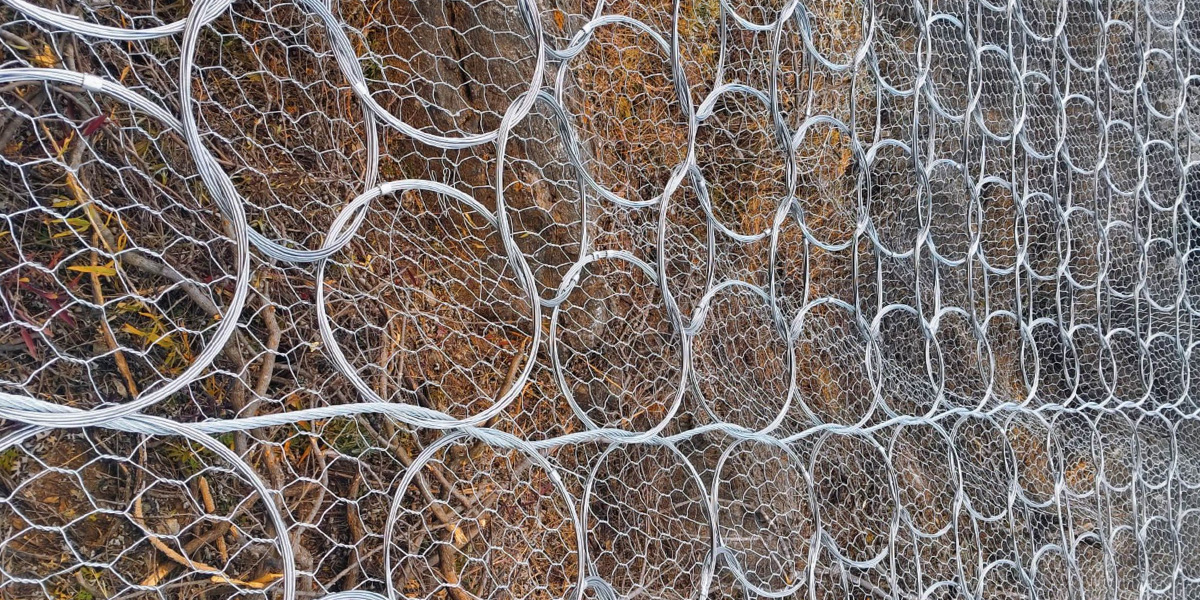
The ring net adopts a two-layer protective structure. The outer layer is formed by interlinked high-strength steel wire rings as the main energy-absorbing mesh, while the inner layer is fitted with small hexagonal wire mesh to intercept smaller falling stones and fragments. Together with boundary ropes, shackles, and anchoring components, the two layers provide both high-impact resistance and finer debris containment.
When impacted by falling rocks, the outer steel rings stretch, rotate, and deform locally to absorb and distribute impact energy, reducing concentrated stress at a single point. The inner small hexagonal mesh supplements the ring net by catching smaller stones that may pass through the larger ring openings. Combined with support ropes and energy-dissipating devices, the system forms a flexible barrier for high-energy rockfall protection.
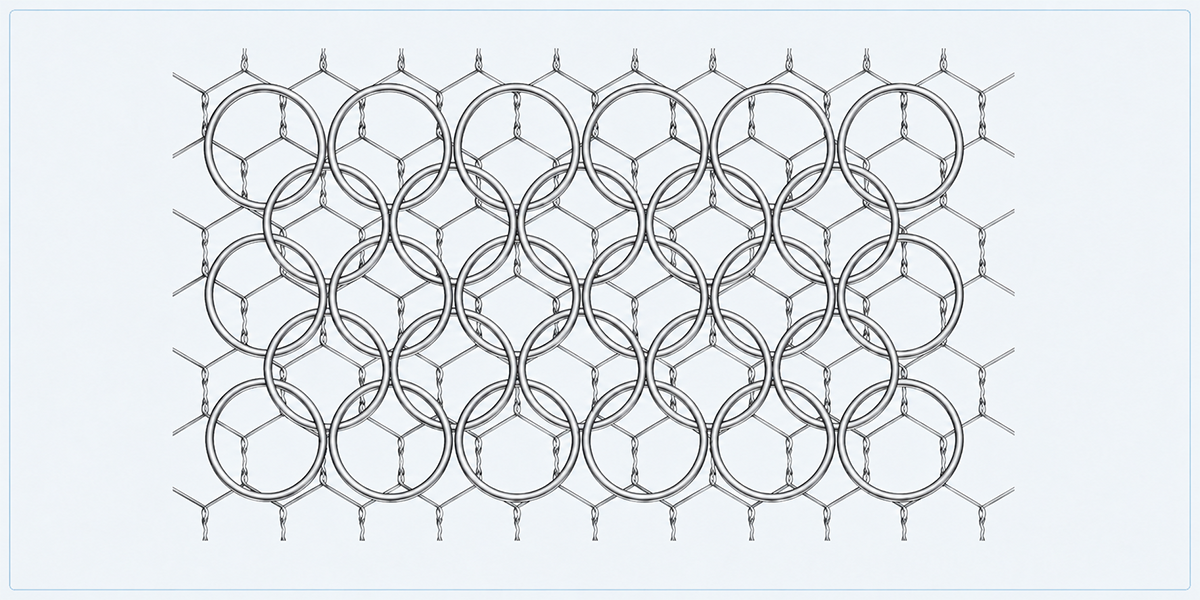
| Ring type | Common 3-ring, 5-ring, 7-ring types, selected by design |
| Wire diameter | Customized by protection level |
| Panel size | Customized by system design |
| Surface treatment | Hot-dip galvanized, zinc-aluminum coating, or other anti-corrosion finish |
| Matched system | Steel posts, support ropes, energy dissipators, anchors |
Designed for slopes with larger falling blocks and higher impact energy.
Controls rockfall risks above highways, railways, and mountain corridors.
Installed across gullies or collapse paths to increase energy absorption.
Protects bridges, tunnel portals, plants, and hydraulic infrastructure.